PRESS RELEASE
FOR BROADCAST ON THURSDAY, NOVEMBER 3 AT 7 A.M.
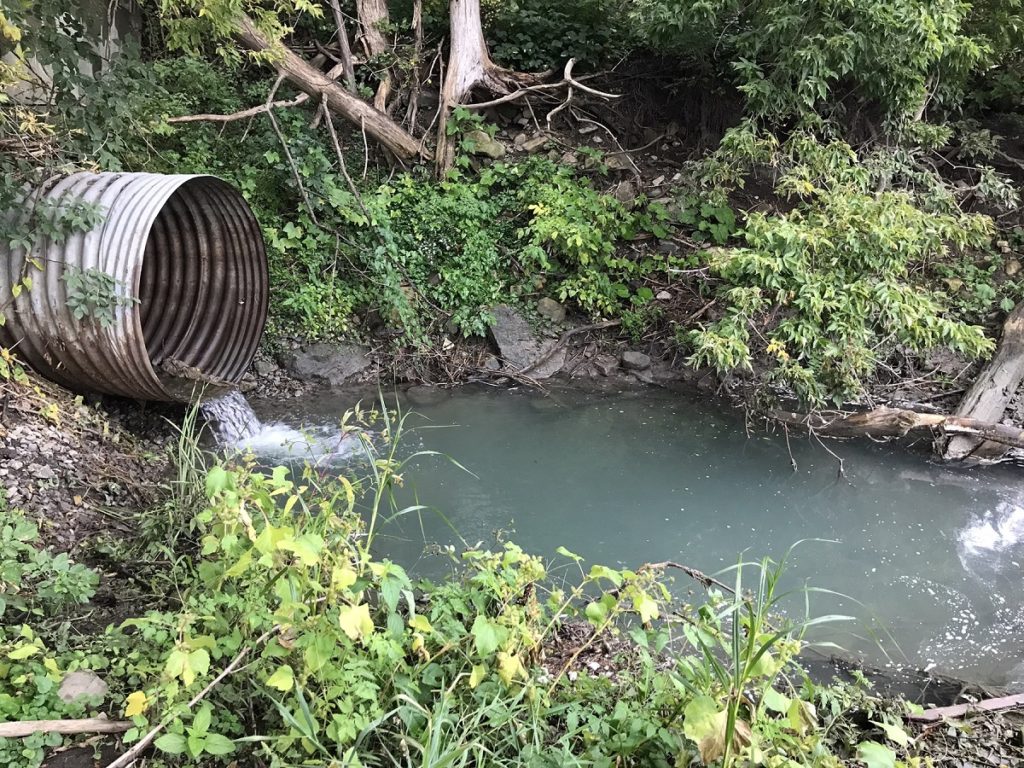
Montreal, November 3, 2022 – For a third year, Fondation Rivières makes public the list of municipalities that stand out in terms of the intensity of their wastewater spills. Quebec experienced 36,391 wastewater spills in 2021, compared to 52,794 the previous year. The Foundation is innovating this year by displaying theevolution of the performances of the 700 municipalities from 2017 to 2021, and this decrease is reflected in the intensity of spills per capita, which has been declining overall for five years.
Less precipitation, fewer spills
A growing number of municipalities are experiencing a decline in the intensity and number of spills. This decrease can be largely attributed to exceptional meteorological phenomena: early melting in spring 2020 had reduced the load on the sewer networks during the big spring rains and there had been little precipitation during the period of spring melt in 2021.
“We must rejoice in the results of the 2021 rankings, but the picture will probably be less rosy in 2022, when we experienced several episodes of intense precipitation in spring and summer,” explains the general director of Fondation Rivières, André Bélanger.
Once again, some municipalities have an advantage in the rankings since they do not have electronic recorders allowing them to count the number and duration of spills. The 2021 ranking, however, reflects the number of diversions carried out by municipalities. Diversion occurs at wastewater treatment plants when wastewater is not properly treated before being released into rivers.
Cities more ambitious than the provincial
The Fondation Rivières invited the 35 most populous cities and municipalities in each administrative region and which are at the top of the ranking to react to their performance. Eight of them provided explanations, either Alma, Baie-Comeau, Blainville, Granby, Lévis, Longueuil, Montreal and Quebec.
Several of them emphasized having adopted objectives aimed at a net reduction in spills, a position which contrasts with that of the Ministry of the Environment, the Fight against Climate Change, Wildlife and Parks (MELCCFP ). This did not provide Quebec with an overall objective for reducing wastewater spills, but simply asks not to increase the number beyond 2013 levels, according to its ministerial position of September 22, 2021 In this same ministerial position, he even grants municipalities a deadline until January 1, 2030 to achieve this objective. Until then, additional discharges are permitted.
“We are in the right direction,” says André Bélanger. We see that municipal elected officials are sensitive to water quality issues and that improvement could be accelerated if the Quebec government had objectives for reducing spills and released the necessary investments to meet them. Our municipal elected officials are more ambitious than our provincial government. »
Sanitation certificates: an effective tool in the hands of a ministry lacking resources
However, the MELCCFP hassanitation certificates, a regulatory tool that has the power to help municipalities accelerate and prioritize the work needed to reduce spills. These certificates are the result of an evaluation of the performance of municipal works by the MELCCFP and they allow it to take action in the event of non-compliance.
The municipality which has a sanitation certificate obtains financing more quickly and easily in order to correct problematic works, including the establishment of green infrastructure and the replacement of unitary networks by separative networks, from the Ministry of Affairs Municipal and Housing (MAMH). For the moment, funding requests from municipalities submitted to the MAMH are processed on a first-come, first-served basis, whereas they should be processed according to their potential to reduce the impact on the receiving environment.
However, barely 160 municipalities out of 850 for which a certificate has been issued to date. It will be necessary to wait until 2026 for this work to be completed. Not only must the MELCCFP devote more resources to speeding up their issuance, but it should also make their content public. You currently have to submit an access to information request to consult them, even though they are of public interest and act as a guide for municipalities.
About the Spill Intensity Index
The ranking is based on the spill intensity index developed by Fondation Rivières. The intensity of spills per capita is an indicator that takes into account the duration of spills and the size of the overflowing structure. It makes it possible to compare the performance of municipalities with each other, regardless of their size, and to distinguish those which have improved compared to previous years from those where the situation has deteriorated.
About the Fondation Rivières
For 20 years, the Fondation Rivières has worked to preserve, restore and highlight the natural character of rivers. It helps ensure water quality and access to water for the Quebec population, taking into account social, environmental and economic dimensions.
To consult the 2021 rankings, the history of the last 5 years, the interactive map and the reaction of the municipalities: https://fondationrivieres.org/carte-palmares-deversements-quebec/
-30-
Source :
Sophie Lachance
Communications and Mobilization Leader
Fondation Rivières
514-272-2666, ext. 307
communications@fondationrivieres.org
Photo: Fondation Rivières